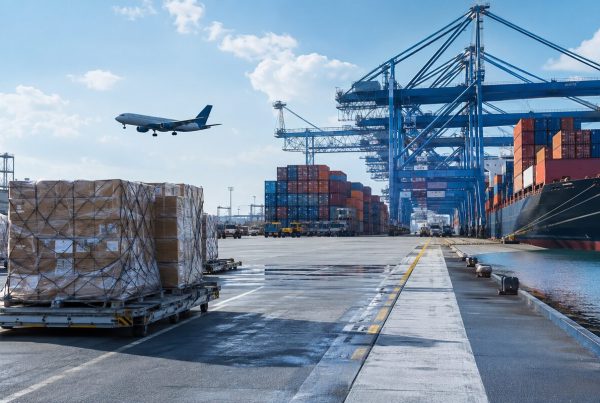
Air freight is one of the fastest ways to move goods internationally. For businesses importing or exporting products, it provides speed, reliability and access to global markets that other transport modes cannot always match.
However, air freight is often misunderstood. Many businesses assume it simply means putting cargo on an aircraft and waiting for it to arrive. In reality, there are multiple stages, documents, handling procedures, customs requirements and transport decisions involved before a shipment reaches its final destination.
This guide explains how air freight works, when businesses should use it, what the process looks like, and what importers and exporters should expect at each stage.
Table of Contents
What is Air Freight?
Air freight is the transportation of goods by aircraft.
Cargo may travel on:
- Dedicated cargo aircraft
- Passenger aircraft with cargo carried in the hold
- Charter aircraft arranged for specific shipments
Air freight is typically used when speed is more important than transport cost.
Common examples include:
- Urgent manufacturing components
- Medical equipment
- Electronics
- High-value goods
- Perishable products
- Time-sensitive retail stock
Businesses often choose air freight when production delays, inventory shortages or customer deadlines make slower transport options impractical.
Why Businesses Use Air Freight
The biggest advantage of air freight is speed.
While sea freight from Asia to the UK may take several weeks, air freight can often move goods within a few days.
Key benefits include:
- Faster transit times
- More frequent departures
- Reduced inventory holding costs
- Better security for valuable goods
- Lower risk of cargo damage through reduced handling
- Improved supply chain flexibility
At Barrington Freight, air freight is commonly arranged for businesses facing production delays, urgent stock replenishment requirements or unexpected supply chain disruptions. Many companies use air freight selectively to keep operations running while larger volumes continue moving by sea freight.
When Air Freight May Not Be the Best Option
Although air freight offers speed, it is not suitable for every shipment.
Potential disadvantages include:
- Higher transport costs
- Airline weight restrictions
- Volumetric weight charges
- Restrictions on dangerous goods
- Limited capacity during peak seasons
For low-value, heavy cargo, sea freight is often more economical.
Many businesses use a combination of transport methods depending on urgency, value and customer requirements.
How Air Freight Pricing Works
Unlike road freight, air freight charges are not based solely on actual weight.
Airlines charge using the higher of:
- Gross weight
- Volumetric weight
Volumetric weight reflects the amount of space occupied by the shipment.
A lightweight but bulky shipment may therefore cost more than a heavier but compact shipment.
For example:
| Shipment | Actual Weight | Chargeable Weight |
|---|---|---|
| Dense metal components | 300kg | 300kg |
| Large lightweight packaging | 120kg | 450kg |
This is one reason why packaging design can have a significant impact on air freight costs.
Types of Air Freight Services
Express Air Freight
Used for highly urgent shipments.
Often operated through major integrators and courier networks.
Typical transit:
- 1 to 3 days internationally
Standard Air Freight
The most common service.
Cargo travels on scheduled airline services.
Typical transit:
- 6 to 9 days depending on route
Air Freight Consolidation
Air freight consolidation combines multiple shipments from different shippers into one larger consignment. Instead of each business booking space directly with an airline, shipments are grouped together by a freight forwarder.
Benefits include:
- Lower freight costs
- Access to regular flight schedules
- Better utilisation of cargo space
- Suitable for smaller shipments
According to Barrington Freight’s air freight consolidation guidance, this approach is particularly useful for businesses shipping smaller consignments that do not justify dedicated airline bookings.
Air Charter Services
Used for:
- Oversized cargo
- Aircraft engines
- Industrial machinery
- Humanitarian aid
- Emergency shipments
Charters provide maximum control but are usually significantly more expensive.
The Air Freight Process Explained
Many businesses only focus on the flight itself.
In reality, the flight often represents a relatively small portion of the total shipment journey.

Step 1: Booking and Planning
The freight forwarder receives details including:
- Commodity
- Weight
- Dimensions
- Collection address
- Delivery address
- Required delivery date
The forwarder then evaluates:
- Flight options
- Airline capacity
- Customs requirements
- Security requirements
- Airport handling arrangements
This stage is often where the best routing decisions are made.
Step 2: Collection from Supplier
Cargo is collected from:
- Factories
- Warehouses
- Distribution centres
The goods are transported to an export handling facility or airport warehouse.
Step 3: Export Customs Clearance
Before departure, export declarations must be completed.
This includes:
- Commercial invoices
- Packing lists
- Commodity codes
- Export documentation
Errors at this stage can delay the shipment before it even reaches the aircraft.
Step 4: Security Screening
Air cargo is subject to strict security controls.
Depending on the cargo type, screening methods may include:
- X-ray inspection
- Physical inspection
- Explosive trace detection
Cargo must meet aviation security requirements before loading.
Step 5: Airline Handling
The cargo is prepared for loading.
This may involve:
- Palletisation
- Consolidation
- Unit Load Device (ULD) preparation
Cargo is then accepted by the airline.
Step 6: Flight Departure
The shipment departs on its scheduled flight.
At this stage, businesses often receive flight information and tracking updates.
Step 7: Arrival at Destination Airport
Upon arrival:
- Cargo is unloaded
- Airline handling processes are completed
- Import documentation is submitted
Step 8: Import Customs Clearance
Before final delivery, customs authorities review:
- Commercial documents
- Commodity codes
- Duties and taxes
- Regulatory requirements
Once customs clearance is completed, the goods can be released.
Step 9: Final Delivery
Cargo is delivered to:
- Warehouses
- Manufacturing facilities
- Distribution centres
- Customer premises
This final stage is often referred to as “last mile delivery”.
At Barrington Freight, we specialise in making your importing and exporting straightforward. From customs clearance to finding the right commodity codes, our expert team is here to assist. Don’t let the complexities of global trade hold you back. Reach out to Barrington Freight for efficient and reliable shipping solutions.
Typical Air Freight Timelines
Transit times vary considerably by route and service level.
A typical international air freight shipment may look like this:
| Milestone | Typical Time |
|---|---|
| Collection from supplier | Day 1 |
| Export handling and security screening | Day 2-3 |
| Flight departure | Day 3-4 |
| Flight transit | Day 4-6 |
| Arrival handling | Day 6-7 |
| Import customs clearance | Day 6-8 |
| Final delivery | Day 6-9 |
Many businesses assume air freight means next-day delivery worldwide.
In practice, customs clearance, airport handling and local transport often account for a significant portion of total transit time.
Why a Different Airport Can Sometimes Be Faster
One of the most misunderstood aspects of air freight is routing strategy.
The nearest airport is not always the fastest option.
Experienced freight forwarders regularly assess:
- Flight frequency
- Available capacity
- Airline schedules
- Customs processing times
- Road transport options
For example, cargo collected inland in China may move by truck several hundred kilometres to a larger airport because daily departures provide a faster overall transit time.
Similarly, a shipment entering Europe might land in a different country and move by road to its final destination because this creates a quicker end-to-end solution.
This approach often surprises first-time importers, but it can significantly reduce delays.
At Barrington Freight, route planning regularly involves evaluating both air and ground transport options to achieve the fastest overall delivery rather than simply choosing the closest airport.
Understanding the Air Waybill (AWB)
The Air Waybill is one of the most important documents in air freight.
It acts as:
- A contract of carriage
- A receipt for goods
- A transport document
- A tracking reference
Unlike a Bill of Lading used in sea freight, an Air Waybill is generally non-negotiable.
Information Included on an Air Waybill
Typical fields include:
- Shipper details
- Consignee details
- Airport of departure
- Airport of destination
- Flight information
- Cargo description
- Weight and dimensions
- Freight charges
- Air Waybill number
Master Air Waybill and House Air Waybill
For consolidated shipments there are usually two documents:
Master Air Waybill (MAWB)
Issued by the airline to the freight forwarder.
House Air Waybill (HAWB)
Issued by the freight forwarder to the shipper.
This structure is common in air freight consolidation services.
Example Air Waybill Structure
- A simplified Air Waybill might contain:
- AWB Number: 123-45678901
- Shipper: ABC Manufacturing Ltd
- Consignee: XYZ Imports Ltd
- Origin Airport: Shanghai Pudong (PVG)
- Destination Airport: London Heathrow (LHR)
- Commodity: Electronic components
- Gross Weight: 250kg
- Chargeable Weight: 320kg
In a published version of this guide, including screenshots or annotated examples of both a Master Air Waybill and House Air Waybill can help readers understand the documentation process more clearly.
Example Air Freight Documentation
What Documents Are Required for Air Freight?
Requirements vary by country and commodity, but common documents include:
- Commercial invoice
- Packing list
- Air Waybill
- Import licence (if applicable)
- Export declaration
- Certificate of origin
- Dangerous goods documentation where required
Incorrect paperwork is one of the most common causes of delays.
Dangerous Goods and Air Freight
Airlines apply strict regulations to dangerous goods.
Examples include:
- Lithium batteries
- Aerosols
- Chemicals
- Flammable liquids
- Certain medical products
Many items that can travel by road or sea face additional restrictions when moving by air.
Always verify requirements before booking.
Air Freight Tracking and Visibility
Modern air freight provides far greater visibility than in previous decades.
Businesses can often track:
- Collection status
- Export warehouse receipt
- Flight departure
- Flight arrival
- Customs clearance
- Final delivery
However, tracking quality varies depending on:
- Airline
- Route
- Freight forwarder
- Destination country
How to Prepare Cargo for Air Freight
Good preparation reduces delays and costs.
Recommended practices include:
- Use strong export packaging
- Clearly label all packages
- Provide accurate dimensions
- Avoid unnecessary packaging volume
- Ensure documentation matches the goods
- Confirm commodity codes before shipping
Poor packaging can increase chargeable weight and create avoidable costs.
Common Air Freight Mistakes
Businesses new to importing and exporting often encounter similar problems.
Common mistakes include:
- Underestimating volumetric weight
- Providing incorrect dimensions
- Incorrect customs documentation
- Assuming airport-to-airport transit equals total transit time
- Waiting too long to book during peak seasons
- Using unsuitable packaging
Most delays occur on the ground rather than in the air.
Choosing the Right Air Freight Forwarder
A freight forwarder should do far more than simply book airline space.
The right partner should help with:
- Route planning
- Customs clearance
- Airline selection
- Documentation
- Compliance
- Tracking and communication
At Barrington Freight, much of the value provided to importers and exporters comes from identifying practical solutions before problems occur. This includes finding alternative airports, securing consolidation opportunities and helping customers understand customs requirements before cargo moves.
Final Thoughts
Air freight remains one of the most effective tools available to importers and exporters that need speed, reliability and global reach.
While it is usually more expensive than sea freight, it can reduce inventory shortages, support urgent production schedules and help businesses meet critical customer deadlines.
Understanding the full process is important. The aircraft journey itself is only one part of the shipment. Collection, customs clearance, airport handling, documentation and final delivery all play a role in determining the true transit time.
Businesses that understand these stages are better positioned to make informed decisions, avoid delays and use air freight strategically as part of a wider international supply chain.
For many companies, the best results come from working with an experienced freight forwarder who can balance cost, speed and routing options while managing the complexity behind the scenes.
About the Author
Simon Poole began his career in production planning, quickly rising to manage 24-hour manufacturing lines and oversee a team of 140 staff. In 2007, he joined Barrington Freight, where he brought his operational expertise into the logistics sector. Appointed Operations Director in 2021, Simon now leads all day-to-day operations, including sea, air and European freight, working closely with clients and partners worldwide.




Need help with your freight?
Contact Barrington Freight for a personalised consultation. We offer fast, reliable freight forwarding for businesses across all industries – by road, air or sea.