Freight forwarding is a complex, multi-stage process designed to ensure that goods move smoothly and compliantly from their point of origin to their final destination — whether by road, air, or sea. At Barrington Freight, we manage every part of this journey with precision and transparency, coordinating logistics, documentation, and customs procedures so our clients can trade globally with confidence.
Below, we outline each stage of the freight forwarding process, from collection to final delivery, along with answers to frequently asked questions for each step.
Table of Contents
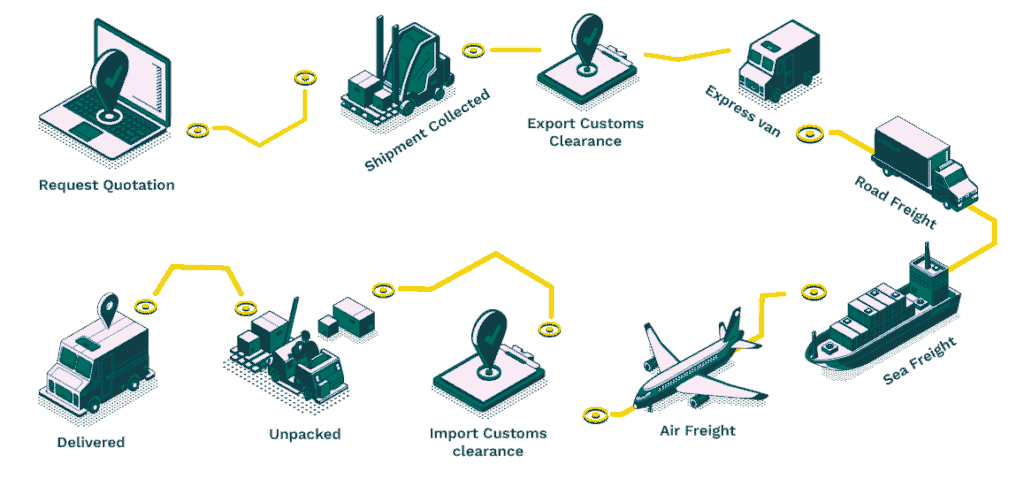
The Freight Forwarding Process in 7 Steps
Step 1: Export Haulage
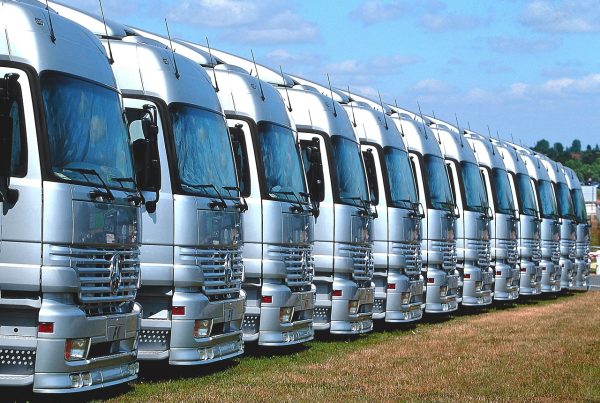
Export haulage refers to the movement of goods from the shipper’s premises to the freight forwarder’s warehouse or terminal. This is the starting point of the international shipping journey and typically involves transport by road, rail, or a combination of both.
During this stage, goods are collected, packed securely for transit, and transported to the consolidation point. Depending on distance, location, and mode of transport, export haulage can take from a few hours to several days.
Key tasks include:
- Collection and loading at the shipper’s premises
- Secure transportation to the forwarder’s warehouse or port terminal
- Inspection and verification of shipment condition upon arrival
- Coordination of delivery schedules with carriers and agents
Step 2: Export Customs Clearance
Before goods can leave the country of origin, they must receive export clearance from local customs authorities. Licensed customs brokers or freight forwarders handle this process by preparing and submitting the necessary export documentation.
Key tasks include:
- Submission of export declarations
- Verification of commodity codes, origin, and value
- Provision of commercial invoices and packing lists
- Payment of applicable duties or fees (if any)
- Confirmation of clearance and release for shipment
Step 3: Origin Handling
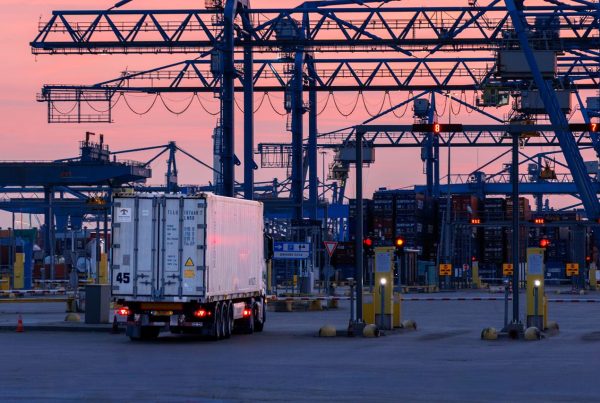
Origin handling covers all operations that occur once the goods reach the freight forwarder’s facility before they are loaded for export. This stage ensures the shipment is properly documented, packaged, consolidated, and ready for international transport as part of the freight forwarding process.
Key tasks include:
- Receiving and unloading the cargo at the warehouse
- Inspection for damage or discrepancies
- Verification against booking and shipping instructions
- Issuing the Forwarder’s Cargo Receipt (FCR)
- Containerisation and consolidation
Step 4: Import Customs Clearance
Import customs clearance ensures that goods meet the legal requirements of the destination country. This step involves the submission of import declarations, classification of goods, and payment of import duties and taxes.
Key tasks include:
- Preparing import documentation
- Declaring goods to customs authorities
- Paying duties, VAT, or tariffs
- Ensuring compliance with import restrictions
- Obtaining customs release for delivery
At Barrington Freight, we specialise in making your importing and exporting straightforward. From customs clearance to finding the right commodity codes, our expert team is here to assist. Don’t let the complexities of global trade hold you back. Reach out to Barrington Freight for efficient and reliable shipping solutions.
Step 5: Destination Handling
Destination handling involves all operations performed by the freight forwarder or their local agent after the cargo arrives at the destination port or airport. This includes document verification, cargo release, and coordination for final delivery.
Key tasks include:
- Receiving and verifying shipping documents
- Collecting the carrier’s bill of lading
- Inspecting goods for compliance
- Coordinating local transport
Step 6: Import Haulage
Import haulage is the final stage — the transportation of goods from the forwarder’s warehouse or destination terminal to the consignee’s premises. Like export haulage, it may be arranged by the freight forwarder or the buyer.
Key tasks include:
- Scheduling local or regional transport
- Final delivery to consignee
- Unloading and confirmation of receipt
- Optional collection of empty containers
Step 7: Fast-Track and Express Deliveries
For urgent shipments, Barrington Freight offers express freight forwarding and next-day delivery options across Europe. These services are ideal for time-sensitive cargo, just-in-time production, or emergency consignments.
Key features include:
- Dedicated vehicles for next-day delivery
- Real-time tracking
- Guaranteed delivery windows
- Coverage across all major European destinations
Why Choose Barrington Freight?
With decades of expertise in international logistics, Barrington Freight delivers reliable, efficient, and compliant freight forwarding solutions tailored to each client’s needs. From full container loads (FCL) and groupage shipments to urgent European road transport, we handle every aspect of your global supply chain — ensuring your cargo arrives on time, every time.
FAQs About the Freight Forwarding Process
Who Is Responsible for Export Haulage?
During the freight forwarding process, responsibility for export haulage is agreed in the shipping terms known as Incoterms.
What Type of Vehicle Is Used During the Export Haulage Phase?
In the freight forwarding process, cargo is usually moved using an HGV or a multimodal combination.
How Is the Cargo Protected?
Goods are secured using straps, pallets, or containers.
What Documents Are Required?
Key documents for the freight forwarding process include a commercial invoice, packing list, export licence, and certificate of origin.
Can Customs Clearance Delay My Shipment?
Yes, delays can occur in the freight forwarding process, usually because paperwork is incomplete or incorrect.
Who Pays for Export Clearance?
Costs depend on Incoterms, under FOB or FCA the seller typically handles it.
What Is the Purpose of the Forwarder’s Cargo Receipt (FCR)?
It confirms receipt and responsibility for onward shipment.
Is Cargo Stored at the Forwarder’s Warehouse?
Yes, often short term.
Can I Track My Goods During the Origin Handling Stage?
Yes, via tracking updates.
Who Is Responsible for Import Clearance?
In the freight forwarding process, import clearance is usually handled by the consignee or a customs broker.
What Happens If Duties Are Unpaid?
Goods remain in storage.
Can Import Clearance Start Before Arrival?
Yes, via advanced electronic declarations.
What Is Included in Destination Handling Fees?
Usually document processing, handling, and storage.
Can the Consignee Perform This Themselves?
Not typically.
How Long Does Destination Handling Take?
It usually takes one to three days, depending on customs checks and congestion in the freight forwarding process.
Who Arranges Import Haulage?
The consignee or freight forwarder.
How Is Delivery Time Determined?
Based on distance and restrictions.
What Happens If Delayed?
If delays occur, the freight forwarding process allows for alternative arrangements to be made.
Which Countries Are Eligible for Fast Track and Express Deliveries?
Most European destinations.
Is Express Freight More Expensive?
Yes, but cost effective for urgent needs.
How to Book?
You can contact Barrington Freight’s operations team to arrange your shipment and start the freight forwarding process.
About the Author
Simon Poole began his career in production planning, quickly rising to manage 24-hour manufacturing lines and oversee a team of 140 staff. In 2007, he joined Barrington Freight, where he brought his operational expertise into the logistics sector. Appointed Operations Director in 2021, Simon now leads all day-to-day operations, including sea, air and European freight, working closely with clients and partners worldwide.




Need help with your freight?
Contact Barrington Freight for a personalised consultation. We offer fast, reliable freight forwarding for businesses across all industries – by road, air or sea.