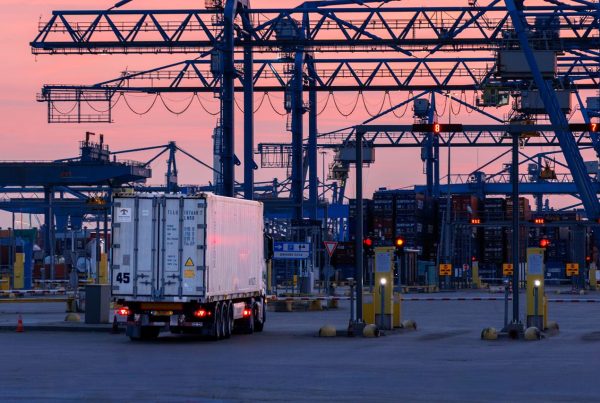
Groupage is a type of road freight where smaller shipments from several businesses are combined within the same vehicle. Instead of paying for a full truck when your goods only use part of the available space, your shipment travels alongside other compatible consignments moving on a similar route.
For businesses importing from or exporting to Europe, groupage shipping can be a practical option for pallets and smaller commercial loads. At Barrington Freight, groupage applies specifically to our European road freight services.
Table of Contents
How does groupage shipping work?
Groupage works by consolidating several separate consignments into one shared road freight load.
The process starts with details about each shipment, including the collection and delivery locations, number of pallets or packages, dimensions, weight and required dates. This allows the freight forwarder to assess how the goods can be combined with other shipments travelling in the same direction.
The consignments are then collected and brought together for transport. Once the vehicle reaches the appropriate point in the journey, individual loads are separated for onward delivery. This process is sometimes referred to as degroupage.
Because several customers may have goods travelling within the same vehicle, careful planning is important. Collections, delivery points and available vehicle space all need to be coordinated before the load departs.
What is the difference between groupage, LTL and FTL?
Groupage, LTL and FTL are all terms used in road freight, but they describe different ways of using truck capacity.
- FTL, or Full Truck Load, means one shipment uses the full vehicle. It is generally suited to larger consignments or situations where a dedicated load is the most practical option.
- LTL, or Less Than Truck Load, refers to freight that only requires part of the available vehicle space.
- Groupage is commonly treated as a type of LTL freight, although the term usually refers more specifically to several smaller consignments from different customers being consolidated into one shared international load.
The right option depends on the size of the shipment, the route and how quickly the goods need to arrive.
When is groupage a good option?
Groupage can work well when a business has a shipment that is too large for a small parcel service but does not require a full truck.
For example, a clothing retailer may need to move a few pallets of stock from the UK to France, while an electronics supplier might have a regular shipment travelling to a customer in Germany. If neither load requires an entire vehicle, groupage can make better use of the available space.
It can also suit businesses whose shipment volumes change from one order to another. One consignment may need FTL transport, while the next may only require space for a handful of pallets.
Common commercial uses can include automotive parts, machinery, electronics, retail stock, clothing and e-commerce goods.
What are the advantages of groupage?
One of the main benefits of groupage is that businesses can use only the vehicle capacity they need.
Other advantages can include:
- Flexible shipment sizes: useful when freight volumes change between orders.
- Efficient use of truck space: several consignments can travel within the same vehicle.
- Suitable for palletised goods: groupage is commonly used for smaller pallet shipments.
- Useful for regular European trade: businesses do not always need to wait until they have enough freight to fill a complete truck.
- Better cost control: the service can be more economical than arranging a full vehicle for a relatively small load.
For businesses that import or export regularly, this can provide a useful middle ground between small deliveries and full truck loads.
Are there any disadvantages to groupage?
Groupage is not always the best choice.
Because several shipments are consolidated together, the collection and delivery schedule usually needs to fit within the wider transport plan for the vehicle. This can make groupage less flexible than using a truck dedicated to one customer.
Goods may also pass through additional handling stages during consolidation and degroupage. For particularly urgent freight, an express groupage service or another road freight option may be more suitable.
Likewise, if a shipment takes up most of the available vehicle space, FTL may make more commercial sense.
A freight forwarder can compare the shipment size, route and timing requirements before deciding which option is most suitable.
At Barrington Freight, we specialise in making your importing and exporting straightforward. From customs clearance to finding the right commodity codes, our expert team is here to assist. Don’t let the complexities of global trade hold you back. Reach out to Barrington Freight for efficient and reliable shipping solutions.
What information is needed for a groupage quote?
Providing accurate shipment information helps a freight forwarder plan the load and provide an appropriate quote.
Businesses should usually be ready to provide details such as:
- Collection and delivery locations
- Number of pallets or packages
- Dimensions of the goods
- Total weight
- Required collection or delivery dates
- A clear description of the goods
Accurate measurements are particularly important because groupage pricing and planning depend partly on the amount of vehicle space a consignment requires.
Providing complete information at the start can also reduce the risk of changes once the shipment has already been arranged.
What documents are needed for European groupage?
International road freight between the UK and Europe requires the correct shipping and customs documentation.
Depending on the shipment, this may include a commercial invoice, packing list and the information needed for customs declarations. Businesses trading internationally may also need the appropriate EORI number.
A CMR consignment note is also commonly used for international road freight. It records key details about the shipment and the contract of carriage between the parties involved.
Product descriptions, quantities, values, weights and commodity information should all be accurate. Missing or incorrect information can create delays or additional work when goods cross the border.
At Barrington Freight, we can help coordinate customs clearance through our experienced partner agencies. This means customs requirements can be considered alongside your wider import or export arrangements.
Arranging groupage freight with Barrington Freight
Groupage can be a useful choice for businesses moving smaller commercial shipments between the UK and Europe, particularly where a full truck would leave significant unused capacity.
Our team can assess the size of your consignment, the route and your required timescale before recommending whether groupage, LTL, FTL or express freight is the most appropriate option.
We have more than 35 years of combined freight forwarding experience and are proud members of the British International Freight Association. We focus on competitive pricing, clear communication and practical support from collection through to delivery.
About the Author
Simon Poole began his career in production planning, quickly rising to manage 24-hour manufacturing lines and oversee a team of 140 staff. In 2007, he joined Barrington Freight, where he brought his operational expertise into the logistics sector. Appointed Operations Director in 2021, Simon now leads all day-to-day operations, including sea, air and European freight, working closely with clients and partners worldwide.




Need help with your freight?
Contact Barrington Freight for a personalised consultation. We offer fast, reliable freight forwarding for businesses across all industries – by road, air or sea.